DMCC, Tether, and the New Commodity Settlement Stack
What the DMCC-Tether MoU means for GCC commodity traders, dual licensing, gold tokenisation, and stablecoin rails replacing SWIFT settlement.
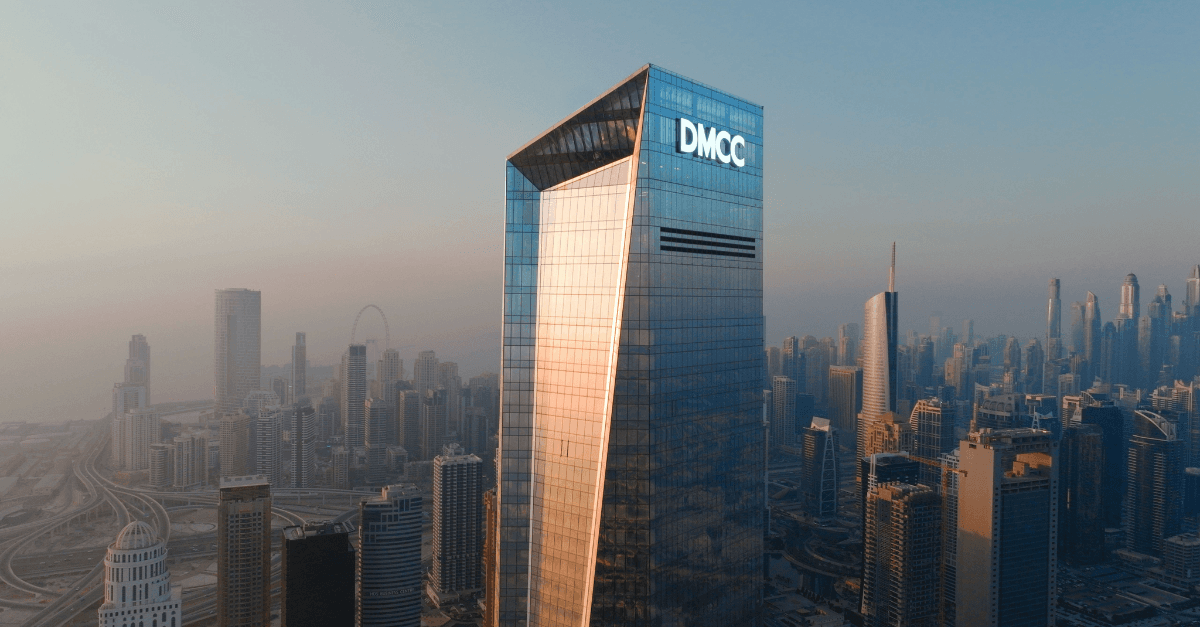
On June 16, 2026, DMCC - Dubai's principal commodity free zone - signed a Memorandum of Understanding with Tether to advance blockchain-based payment systems, asset tokenisation, and blockchain education across its 26,000-company ecosystem. For commodity firms already operating within the DMCC, the MoU carries weight: USDT is now the designated settlement instrument for DMCC's emerging digital trade infrastructure, confirmed at the free zone level, by the free zone authority. This article covers what the MoU commits to, how the dual licensing architecture works for firms that want to use digital assets, and what compliant settlement infrastructure looks like for DMCC-registered commodity traders today.
For background on how commodity trades are settled and where the friction sits, see What Is Commodity Trade Settlement?
Key Takeaways
- The DMCC-Tether MoU (June 16, 2026) is designed to advance blockchain-based payment systems, asset tokenisation, and blockchain education across DMCC's 26,000-company ecosystem, institutional confirmation that Dubai is building commodity stablecoin infrastructure at the free zone level.
- Dual licensing is mandatory for DMCC firms using digital assets: a DMCC trade license establishes legal existence only, VARA determines whether virtual asset activities are permitted, through one of three licensing pathways with timelines from 2 weeks to 9+ months.
- Gold tokenisation is the most advanced commodity tokenisation use case within the DMCC: the global tokenised gold market has reached approximately $6 billion in market capitalisation, with Dubai positioning as the primary institutional hub.
- Four strategic trade corridors are being transformed by stablecoin settlement: GCC-India ($60B trade surplus, 3–5 days compressed to same-day), GCC-Turkey ($170B digital asset base, Lira FX risk), GCC-Nigeria ($12B in DMCC-linked commodity trades), and GCC-Algeria ($20B gas flows).
- USDT is classified as a Foreign Payment Token (FPT) under the UAE's Payment Token Services Regulation (PTSR), approved for institutional cross-border B2B settlement, distinct from Dirham-pegged tokens designated for domestic retail use.
For firms that are new to the de-banking context, see the foundational article in this series: Why GCC Commodity Traders Are Getting Debanked. The data supporting this article is drawn from the GCC Commodity Trader's Playbook, ARP Digital's 2026 intelligence report on GCC commodity trade and stablecoin settlement infrastructure.
What did the DMCC-Tether MoU actually announce?
The June 16, 2026 MoU between DMCC and Tether is a framework agreement, it commits both parties to collaborative development across three areas: blockchain-based payment systems for DMCC member firms, asset tokenisation pilot programmes for commodities traded within the free zone, and blockchain education for DMCC's commercial network. The MoU is a framework agreement, individual DMCC-registered firms cannot transact differently today as a direct result. What it does establish is the institutional trajectory: USDT has been designated as the settlement instrument of choice at the free zone infrastructure level, an institutional decision, separate from individual firms adopting it independently.
The Tether selection matters specifically because USDT is the world's most capitalised fiat-backed stablecoin, the instrument that has already become the de facto cross-border settlement standard for commodity firms that have lost correspondent banking access. The DMCC-Tether MoU brings that instrument inside the free zone's formal infrastructure architecture.
The regulatory framework that makes this workable: under the UAE's Payment Token Services Regulation (PTSR), fully enforced from July 6, 2025, USDT is classified as a Foreign Payment Token (FPT). FPTs are approved for institutional cross-border B2B settlement — precisely the use case for DMCC commodity firms settling international cargo invoices. Domestic retail payment use of USDT remains prohibited under the PTSR. The institutional B2B classification creates the legal lane the MoU operates within. (CBUAE, Payment Token Services Regulation, 2024)
The AED/USD digital conversion layer is also being built in parallel. AE Coin (AED-pegged, CBUAE-approved) and USDU (USD-backed FPT, licensed January 2026) enable an automated digital conversion mechanism for institutional commodity traders, cross-border invoices settled in USDU can be converted to AE Coin for UAE domestic use. This is the broader digital rail being constructed around the DMCC settlement ecosystem.
Tether's direct participation in commodity trade finance adds a further data point: Tether has extended approximately $1.5 billion in credit to commodity traders, participation in physical commodity trade finance, beyond its role as a payment instrument. (Spark.money research)
What is the dual licensing architecture for commodity firms using digital assets in the DMCC?
The most important compliance point for DMCC-registered firms: a DMCC trade license and VARA authorisation are issued by separate regulatory bodies with non-overlapping jurisdiction. A DMCC trade license establishes legal existence within the free zone. VARA, the Virtual Assets Regulatory Authority, is the sole authority that determines whether a firm may conduct virtual asset activities within Dubai, including within the DMCC. A DMCC license alone does not authorise any virtual asset activity.
Three operational pathways determine what licensing a firm requires, depending on what it wants to do:
Operational Pathway | Regulatory Requirement | Process Summary | Est. Timeline |
|---|---|---|---|
Non-Regulated Activities | DMCC Trade License Only | For blockchain software development, consulting, or marketing. No VARA approval required as the activity falls outside the regulatory perimeter. | 2 to 3 weeks |
Proprietary Trading (Virtual Assets) | DMCC License + VARA Non-Objection Certificate (NOC) | For commodity firms trading virtual assets using proprietary capital. Requires a formal NOC from VARA prior to DMCC finalising the license. | 4 to 8 weeks |
Regulated VASP Operations | DMCC License + Full VARA VASP License | For exchanges, broker-dealer services, or custody. Requires Initial Disclosure Questionnaire, Approval to Incorporate from VARA, 50% fee payment, provisional DMCC license, and final VARA compliance checks. | 7 to 9+ months |
(Source: Neos Legal, DMCC Dubai Crypto Company Setup: Founder's Legal Guide, 2026, cited in ARP Digital GCC Commodity Trader's Playbook)
Physical and operational requirements are mandatory for firms pursuing regulated pathways. A finalised office lease within DMCC jurisdiction is required, not optional. Employee visas must comply with UAE labour laws. A dedicated, locally resident Compliance Officer must be in place with an AML/KYC framework. A UAE corporate bank account is required, and banks conduct extensive due diligence on digital asset sector clients, budget for the documentation burden.
How is gold tokenisation developing within the DMCC?
Gold is DMCC's flagship commodity and the most operationally advanced tokenisation use case within the free zone. The global tokenised gold market has reached approximately $6 billion in market capitalisation, with Tether Gold (XAUt) and Paxos Gold (PAXG) accounting for approximately 97% of market share. Dubai has positioned as the primary institutional hub for tokenised gold settlement, outpacing Switzerland and Singapore. (ARP Digital, GCC Commodity Trader's Playbook, citing BCG and World Gold Council)
The DMCC-Comtech Gold partnership provides the operational model. Over 122 kilograms of 999.9 purity gold have been tokenised on the XinFin (XDC) blockchain. Each Comtech Gold Token represents exactly one gram of physically allocated gold stored in DMCC-approved vaults. The token is redeemable for physical delivery, backed by allocated metal in an audited vault, with value anchored to the gold price rather than secondary market liquidity. (DMCC official data; Comtech Gold announcement)
For commodity firms evaluating tokenised gold as a settlement or collateral instrument: it eliminates logistical complexity, transport costs, and storage overhead associated with physical bullion. Settlement is 24/7. Fractional ownership is enabled. The instrument can function as collateral for institutional liquidity arrangements without the friction of physical transfer.
B2C2 now offers 24/7 OTC trading for PAXG and XAUt against fiat currencies and USD stablecoins, creating a live institutional liquidity layer for tokenised gold within the broader settlement ecosystem.
The institutional stack is being standardised further. The World Gold Council and BCG have proposed an open infrastructure platform, Gold as a Service, to connect physical gold custody with the digital systems used to issue and manage gold-backed products. When implemented, this would create a standardised interface between allocated vault custody and blockchain-based issuance across multiple jurisdictions.
Which trade corridors benefit most from DMCC stablecoin settlement?
Four corridors account for the most significant operational gains from stablecoin settlement infrastructure within the DMCC ecosystem.
Corridor | Trade Volume (2024) | Settlement Challenge | Stablecoin Advantage |
|---|---|---|---|
GCC – India | $60B trade surplus | 3–5 day SWIFT lag; AED/USD/INR conversion; correspondent hops | Same-day via two regulated entities; RTGS delivery; single AML framework |
GCC – Turkey | $170B digital asset base | Lira FX volatility; 30–40% depreciation risk on settlement delay | USDT/USDC as synthetic USD; 24/7 settlement; no FX exposure duration |
GCC – Nigeria | $12B commodity trades | Parallel FX markets; dollar access restrictions; CBN controls | Direct USD stablecoin liquidity; permissionless settlement; no correspondent dependency |
GCC – Algeria | $20B gas trade flows | USD liquidity scarcity for energy export receipts | Stablecoin rails enabling direct energy-linked settlement without dollar clearing |
(Source: ARP Digital, GCC Commodity Trader's Playbook, 2026, citing CEPA data and corridor-level settlement analysis)
What does a compliant settlement counterparty look like for DMCC-registered firms?
Four things to confirm before committing settlement volume to any counterparty:
1. VARA. For Dubai and DMCC-registered settlement counterparties, confirm they hold a VARA and confirm what specific operational permissions that stage covers.
2. PTSR compliance - USDT as FPT. USDT is classified as a Foreign Payment Token under the UAE PTSR, approved for institutional cross-border B2B settlement. Confirm the settlement provider operates within this classification and that flows are structured as institutional B2B settlement, rather than retail or domestic transactions. The domestic retail restriction is separate and does not apply to cross-border institutional settlement.
3. AED on live local rails. A settlement provider receiving AED via SWIFT-routed flows carries the same correspondent delays and exposure the commodity firm is trying to remove. Confirm that AED is received via direct UAE local banking infrastructure. "AED support" does not mean live local rails,ask specifically.
4. Named vIBAN per client. AML documentation under CBB and CBUAE frameworks requires a traceable fund trail from origination. Pooled receiving accounts create documentation gaps at the point of AED receipt. Named virtual IBANs per client confirm sender identity at the receipt stage.
How ARP Digital provides stablecoin settlement for GCC commodity firms
ARP Digital provides cross-border corridor settlement and OTC conversion for exchange houses, PSPs, and institutional trading firms operating in BHD and other GCC corridors, under CBB regulatory oversight.
FLOW Send delivers cross-border settlement via live local GCC rails. FIAT is received through ARP's direct GCC banking relationships, not SWIFT-routed, converted to stablecoin at a rate confirmed at initiation, and settled to the destination side through ARP's local settlement partner. FLOW Convert provides OTC fiat-to-stablecoin conversion at a rate confirmed at initiation, for commodity firms that need to convert BHD to USDT at institutional scale.
Regulatory standing: ARP holds a CBB Category 3 licence (Capital Markets Crypto-Asset Service Provider, CRA-1.1.13) and VARA broker dealer licence.
Onboarding: Business KYB and AML framework for institutional counterparties, exchange houses, PSPs, and commodity trading firms. Named vIBANs per client for documented fund trails compliant with CBB and CBUAE AML reporting requirements.
Explore ARP Digital's institutional settlement infrastructure → Speak with our settlement team →
Want the full picture on GCC commodity settlement? Download ARP Digital's GCC Commodity Trader's Playbook — a 26-page intelligence report on the DMCC, UAE regulatory framework, and the stablecoin settlement stack replacing correspondent banking. Download the Playbook →
Frequently Asked Questions
The June 2026 MoU between DMCC and Tether is designed to advance blockchain-based payment systems, asset tokenisation pilots, and blockchain education across DMCC's 26,000-company ecosystem. It is a framework agreement that confirms USDT as the designated settlement instrument for DMCC's stablecoin settlement infrastructure, without immediately changing what individual firms can transact today. For commodity firms already in the DMCC, it validates the regulatory trajectory and signals counterparty readiness across the free zone ecosystem.
A DMCC trade license establishes legal existence within the free zone. VARA, the Virtual Assets Regulatory Authority, is the sole authority determining whether an entity may conduct virtual asset activities within Dubai, including within the DMCC. They are issued by separate regulatory bodies with non-overlapping jurisdiction. A commodity firm that wants to receive, send, or settle using digital assets needs VARA authorisation specific to its activity type, either a Non-Objection Certificate (for proprietary trading) or a full VARA VASP licence (for regulated services).
USDT is classified as a Foreign Payment Token (FPT) under the UAE's Payment Token Services Regulation (PTSR), fully enforced from July 6, 2025. FPTs are approved for institutional cross-border B2B settlement, the precise use case for DMCC commodity firms settling international cargo invoices. Domestic retail use of USDT remains prohibited under a separate classification. Commodity firms should confirm permissible use with their VARA compliance liaison and legal counsel before go-live.
Tokenised gold is a digital instrument where each token represents a defined quantity of physically allocated metal in an audited vault. DMCC partnered with Comtech Gold to tokenise over 122 kilograms of 999.9 purity gold on the XDC blockchain, each token equals one gram of allocated metal in DMCC-approved vaults. Unlike physical bullion, tokenised gold settles 24/7, enables fractional ownership, and can function as a collateral instrument for institutional liquidity without the logistical complexity of physical transfer.
The GCC-India corridor sees the most significant gain, a $60 billion trade surplus with 3-to-5 day SWIFT settlement compressed to same-day via stablecoin rails with RTGS delivery in INR. The GCC-Turkey corridor benefits from stablecoin functioning as synthetic USD against Lira depreciation risk. Nigeria ($12B in DMCC-linked commodity trades) and Algeria ($20B in gas flows) benefit from direct USD-pegged liquidity access where correspondent banking is restricted or unavailable.